Word Link - Cash Tournament
JYazraWord
4.3801.00 Reviews
- Version
- 1.5.2
- Installs
- 100.00K
- Age Rating
- Everyone
Screenshots

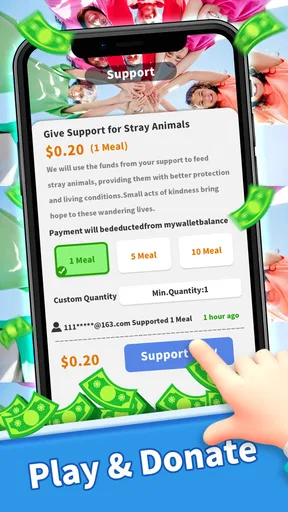
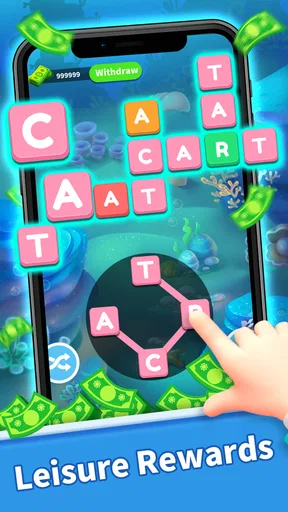
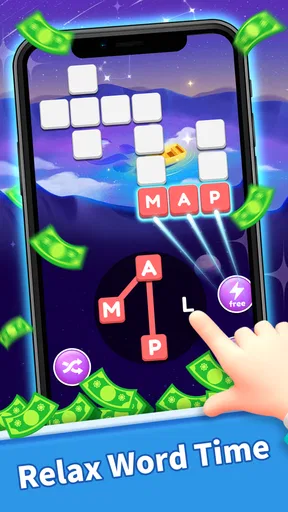
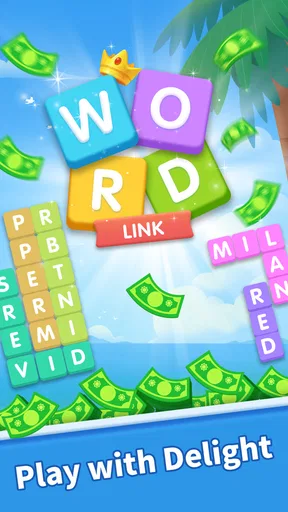
Our Review of Word Link - Cash Tournament
 Analysis by Appyee
I approached Word Link - Cash Tournament expecting a simple word game, but what stood out to me was how quickly it asks me to think about progress. The basic appeal is easy to understand: connect words, solve challenges, and keep moving toward the next objective. Its focus is narrow, which is useful when I want a short mental break rather than a large game with a long tutorial or complicated controls.
It is a free word game from JYazra, aimed at an Everyone audience. The store summary presents it as a word challenge with cash prizes, while the short description identifies the central idea as Word Link. That combination makes the game sound more competitive than a traditional crossword or an ordinary vocabulary exercise. My impression is that its best audience is someone who enjoys quick pattern recognition and wants a little extra pressure around familiar word puzzles.
How the first sessions establish a reason to continue
The opening experience matters in a word game because the rules need to become clear almost immediately. Word Link benefits from having a concept that most players can understand without much explanation: look at the available letters or word relationships, find a valid connection, and complete the challenge. I did not need to learn a large collection of controls before getting to the part that matters, which is making decisions under a little time and attention pressure.
The early goals are not only about solving one puzzle after another. They also help me decide whether the game’s rhythm suits me. A successful round gives a small sense of completion, while a difficult clue encourages another attempt instead of demanding a long commitment. This is a good fit for a commute, a waiting room, or a few quiet minutes before bed. I can play with concentration, stop, and return later without feeling that I have abandoned a complicated campaign.
One useful habit is to avoid spending all my attention on the first answer that comes to mind. In word-link puzzles, the obvious connection can be a distraction, especially when several words share a broad meaning. I get better results by scanning for the most restrictive clue first, then checking whether the remaining words form a sensible group. That approach turns the game from random guessing into a repeatable method.
The cash-prize framing changes how I read those early goals. Even when the puzzle itself is familiar, the possibility of competing for a reward can make a small mistake feel more important. I would recommend treating the prize angle as an extra incentive rather than the entire reason to play. If the word-solving is not enjoyable on its own, the competitive promise will not magically make every round satisfying.
Progress is easiest to feel when I notice my own solving habits
Word games do not always provide the dramatic progression found in role-playing games. There may be no character build or elaborate world to explore, so the clearest progress signal is often personal: I recognize patterns faster, hesitate less, and recover from a wrong assumption more calmly. That is where this game can become more rewarding over repeated sessions. The challenge is not just reaching another screen; it is improving the way I read the available words.
I found it helpful to separate a failed attempt into two questions. First, did I misunderstand the relationship between the words? Second, did I see the connection but rush the input? Those are different problems, and identifying which one happened makes the next round more productive. If the issue was interpretation, I slow down and test alternate meanings. If it was haste, I read the full group again before committing.
That small self-review is one of the more valuable ways to use the game. It gives the sessions a learning loop without pretending that every puzzle is a lesson. Players who enjoy vocabulary, spelling, and lateral thinking will probably notice this improvement more clearly than people who only want a completely passive distraction.
The current version is 1.2.0, and the game has reached over one hundred thousand installs with a 4.8 average from around three hundred ratings. Those figures suggest that the basic idea has found an audience, but I would not use popularity alone to decide whether it belongs on your phone. Word games are highly personal: one player’s satisfying compact challenge is another player’s repetitive routine.
For me, the strongest progress signal is the changing amount of effort needed to solve a familiar type of connection. When I can identify likely relationships before trying every possibility, the game feels more rewarding. A practical tip is to keep a mental list of common word-link patterns, such as words that can follow the same term or belong to a recognizable category. I do not treat that as memorizing answers; I treat it as building a better search strategy.
The difficulty curve rewards patience more than frantic guessing
The difficulty in a word-link game comes from ambiguity rather than complicated controls. A puzzle can look easy because every word is familiar, yet the intended relationship may be narrower than the first interpretation. That creates a useful curve when the game asks me to move from direct associations toward more flexible thinking. The challenge feels fair when I can understand the solution afterward, even if I did not see it immediately.
My preferred way to handle a stubborn round is to make two passes. During the first pass, I mark the strongest relationships without forcing a complete solution. During the second, I look at the words left over and ask what unusual connection they share. This prevents one uncertain word from controlling the entire attempt. It is also a good way to reduce the frustration that comes from repeatedly tapping the same guess.
Players who expect a traditional crossword may need to adjust their expectations. A crossword usually gives intersecting letters as confirmation, while a word-link format depends more heavily on meaning and association. That makes it quicker to start but sometimes less transparent when I am stuck. A dictionary-based word game may be better for someone who wants spelling practice, and a crossword may be preferable for someone who enjoys a visible grid and gradual letter-based deduction.
On the other hand, Word Link has an advantage over those alternatives when I want a more immediate challenge. I do not have to prepare a large board or commit to a long puzzle. The compact format makes it easier to fit into spare moments, and the competitive framing gives each solved group a little more urgency than a purely offline vocabulary exercise.
The main trade-off is that the same simplicity can make the experience feel limited for expert puzzle fans. If you want deep thematic construction, elaborate clue writing, or a broad narrative around the puzzles, this is not the type of game I would choose first. Its appeal depends on the quality of the individual word connections and on whether the short-session format keeps feeling fresh to you.
Where the retention pressure helps and where it may become tiring
The game’s strongest retention tool is the desire to solve one more challenge after a near miss. That is a healthy kind of pressure when I am choosing to continue because I can see how to improve. It becomes less appealing when the prize-oriented framing makes every pause feel like lost progress. I think players should set their own stopping point rather than letting the tournament language dictate the length of a session.
A realistic everyday scenario is a short lunch break. I might open the game intending to play for only a few minutes, solve a straightforward word group, then meet a more ambiguous one. Instead of repeatedly guessing while distracted, I would stop after identifying the likely pattern and return when I can focus. That approach protects the fun. It also makes the next attempt feel like a deliberate challenge rather than a frustrated reaction.
Another useful routine is to play when I am mentally alert, not when I am already tired. Word association depends on attention, and a puzzle that seems unfair late at night may simply be harder to read when my concentration is low. If the game is being used as a quick break, I would keep sessions short and judge it by whether I finish feeling refreshed rather than irritated.
The cash-prize message deserves a careful, practical interpretation. I would not install this solely as an income strategy. The confirmed appeal is that it combines word challenges with a tournament-style reward concept, but responsible expectations matter. The game should first be enjoyable as a word puzzle. Anyone uncomfortable with competitive reward messaging may prefer a standard word game with no prize-oriented emphasis.
That is also where the Everyone rating is relevant. The game is presented as suitable for a broad audience, which makes it approachable for families and casual players. Still, suitability does not mean every player will enjoy the same pressure. Younger players may need guidance about treating prize language as part of the game rather than a promise of dependable earnings, while adults should make their own decision about whether that style of motivation feels comfortable.
Who will get the most from this particular format
I would recommend Word Link to players who like vocabulary puzzles but do not want a long crossword session. It suits people who enjoy spotting relationships, testing alternate meanings, and improving through repetition. It is also a reasonable choice for someone who wants a lightweight word game that can be picked up without learning a complicated interface.
It is less suitable for players who need a strong story, rich customization, or a clearly visible long-term progression system. Those players may feel that solving individual challenges is not enough. I would also suggest looking elsewhere if you want a purely educational spelling tool, because a link-based challenge tests association and interpretation more than formal language instruction.
Compared with a typical anagram game, the experience feels less focused on rearranging letters and more focused on recognizing a relationship. Compared with a crossword, it is faster to enter but offers fewer intersecting clues to guide me. Compared with a casual trivia game, it rewards language flexibility rather than broad factual recall. Those differences are important because they explain both its accessibility and its limits.
One non-obvious advantage is that I can use the game to identify my own blind spots in word association. If I repeatedly miss links involving a particular type of meaning, I can notice whether I rely too heavily on literal definitions, common phrases, or visual patterns. That makes the game more useful than a simple sequence of wins and losses. I am not just asking whether I solved a puzzle; I am learning which assumptions slow me down.
Another practical tip is to read every word as part of the whole set. A word that seems to have several possible partners may be intentionally flexible, while a more unusual word can act as the anchor. Starting with the most distinctive item often narrows the possibilities faster than beginning with the most familiar one. This is especially helpful when impatience encourages random tapping.
My progression verdict after weighing the complete loop
Word Link - Cash Tournament works best when I view its progression as a combination of short-term completion, improving pattern recognition, and the extra tension of tournament-style rewards. It does not need an elaborate unlock tree to be engaging if the word relationships remain satisfying. The pacing is strongest when a round is quick enough to respect my time but challenging enough to make the next attempt feel earned.
Its limitations are equally clear. The format may not provide enough variety for someone seeking a large, content-heavy game, and the prize emphasis may not appeal to players who want a completely relaxed puzzle experience. I also would not confuse a high rating with a guarantee that every challenge will match my vocabulary or preferred difficulty. The right question is whether I enjoy the act of finding links under pressure.
For a free game, it offers an accessible way to fill small gaps in the day while exercising attention and word association. The developer, JYazra, has kept the concept focused rather than burying it under unrelated systems. That focus is a strength for casual play, although it means the game’s long-term appeal depends heavily on whether its puzzle flow continues to feel varied to the individual player.
My final recommendation is simple: try it if you want quick word challenges and like the idea of a more competitive atmosphere. Start with modest expectations about the cash-prize angle, pay attention to how the difficulty affects your mood, and use the two-pass solving method when a group seems unclear. If you enjoy improving your own pattern recognition, the game has a clear reason to stay installed. If you want a deep campaign or a traditional crossword structure, another word game will probably serve you better.
The best reason to keep playing is not the promise of a reward; it is the moment when a connection that once felt obscure becomes immediately visible. That personal improvement gives the short sessions meaning, and it is what makes this particular word game more than a disposable guessing exercise.
Privacy and Permissions
See what permissions an app requests and how it handles your data.
- Wi-Fi connection information
- view Wi-Fi connections
- Other
- view network connections, full network access, control vibration, prevent device from sleeping, Google Play license check
Verdict
Strengths of Word Link - Cash Tournament
- Quick word puzzles are easy to learn and play in short sessions.
- Cash tournaments add excitement for players who enjoy competitive challenges.
- The game offers a simple interface with minimal controls to master.
- Word knowledge and spelling skills can improve through regular play.
- Leaderboards provide extra motivation to compete against other players.
Limitations of Word Link - Cash Tournament
- Cash prizes may depend on location, eligibility, and tournament availability.
- Some tournaments may require entry fees or in-app purchases to participate.
- Ads can interrupt gameplay, especially between rounds or puzzle sessions.
- Results may favor fast typists and experienced word-game players.
- Withdrawal rules, minimum limits, and processing times may vary.
Similar Picks in This Category
View All
Word Search - Word Puzzle Game
Bluetile4.8

Word Search Quest - Puzzles
Blackout Lab4.8

CodyCross: Crossword Puzzles
Fanatee, Inc.4.7

Words of Wonders: Crossword
Fugo Games4.9

Wordscapes: Word puzzle game
PeopleFun4.7

Word Search Explorer
PlaySimple Games4.9
Frequently Asked Questions
What is Word Link - Cash Tournament and how does it work?
Word Link - Cash Tournament is a word puzzle game built around connecting letters to form words and completing level-based challenges. As you progress, the game may present tournaments, rankings, rewards, or other competitive events. The exact gameplay and available features can vary by region and version, so review the in-app rules carefully before entering any contest or expecting a particular type of prize.
Can I really win cash or other rewards in Word Link - Cash Tournament?
The title suggests that the app may offer cash tournaments, but rewards, eligibility, and withdrawal options are not necessarily the same for every player. Some events may provide virtual currency, gift cards, promotional prizes, or cash-equivalent rewards instead. Before participating, check the tournament terms, minimum payout requirements, supported countries, identity checks, and any applicable restrictions shown inside the application.
Is Word Link - Cash Tournament free to download and play?
The application may be free to install, but free access does not always mean that every feature is completely cost-free. Games in this category commonly include advertising, optional in-app purchases, entry requirements, or limitations on the number of challenges available each day. We recommend checking the Google Play Store or App Store listing and reviewing the payment details before making a purchase or joining a paid event.
Does Word Link - Cash Tournament require an internet connection?
An internet connection is generally important for tournament participation, account synchronization, advertisements, leaderboards, reward tracking, and prize-related functions. Some basic word puzzles may work temporarily without a connection, but offline progress might not be saved or counted toward competitive events. For the most reliable experience, use a stable connection and reopen the app after reconnecting if your score or rewards do not appear immediately.
Is Word Link - Cash Tournament safe for children and personal data?
Parents should check the app’s current age rating, privacy policy, permissions, advertising practices, and tournament rules before allowing a child to use it. Cash-related features can involve age, location, or identity requirements, while account services may collect device or usage information. Avoid sharing unnecessary personal details, use official app-store download links, and enable parental controls if purchases or competitive events are a concern.
Play our best games!


